Keeping your best employees has become increasingly challenging. With rising expectations, remote opportunities, and changing workplace values, employee retention has become a top concern for HR teams.
So, how do you make sure your talent stays engaged, productive, and loyal? From employee benefits to company culture, career growth, and employee reward ideas, there are dozens of levers you can pull to create a workplace people don’t want to leave.
Here are 28 employee retention strategies you can implement to reduce costly turnover.
What is employee retention?
Let’s start with the basics: employee retention refers to a company’s ability to keep its employees over time.
It’s typically measured as a percentage of employees who remain with an organization during a specific time period.
According to the U.S. Bureau of Labor Statistics, the average turnover rate in 2023 was 47.2%, with certain industries like hospitality reaching over 80%.
Retention is not just about avoiding exits; it’s about actively creating an environment where employees choose to stay.
Did you know?
A well-known study by Peoplekeep shows that replacing an employee can cost 6 to 9 months of their salary. For someone earning $60,000/year, that translates to $30,000–$45,000 in costs
Common reasons why employees leave a company
Understanding why people leave is key to building better retention programs. Here are the top reasons employees walk away:
- Compensation that doesn’t reflect their skills or market value
- Poor benefits or perks compared to competitors
- Excessive workload or lack of support
- Limited or unclear career progression paths
- Inflexible work hours or poor work-life balance
- Lack of recognition or appreciation
- Monotonous tasks or lack of challenge
- Poor relationship with direct managers
- Uncertainty about company vision or financial health
- Misalignment with company culture
- Personal desire for change
- Better offers from competitors
- Lack of meaningful work or purpose
- Poor internal communication
- Outdated tools or tech leading to frustration
28 employee retention strategies
Are you looking for some inspiration to build a human resource retention strategy? Mix and match from our list of employee engagement ideas below!
A little bit of HR Trends, mixed with some good old employee retention solutions, you’re sure to find something that fits your team’s needs.
Workplace wellness & engagement
1. Offer flexible work arrangements
Flexibility is a cornerstone of modern engagement. Give employees autonomy over when and where they work — through remote setups, flex hours, or 4-day work weeks. Flexibility helps reduce burnout, supports caregivers, and fosters trust.
Best for: Organizations that want to boost retention and inclusivity, especially across multigenerational teams.
2. Promote work-life balance
Model a culture where rest is valued. Set boundaries around after-hours emails, normalize taking vacation, and actively encourage digital detoxes. Leaders should lead by example — wellness starts at the top.
Best for: Fast-paced or high-demand environments where presenteeism or burnout are ongoing challenges.
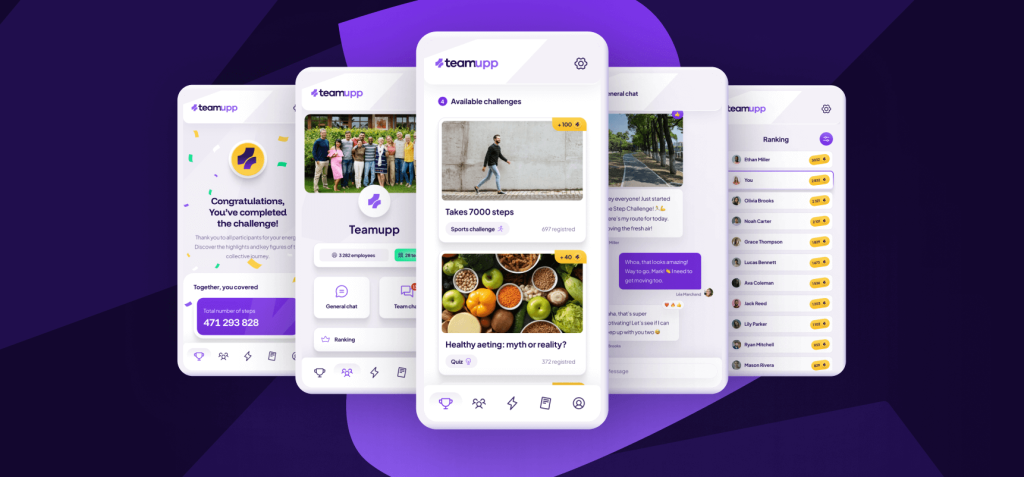
3. Build a year-round employee wellness program
Why just plan a one-off wellness day? Create an ongoing, high-impact experience that truly supports your team’s health, motivation, and connection.
With our wellness platform, you can launch gamified wellness challenges all year long, tailored to your company culture and goals.
From mental health and movement challenges to Sustainability-driven missions, our app helps you boost participation by turning healthy habits into team-powered games. Employees earn points, and even real-world rewards for their actions — whether they’re walking more, eating better, or contributing to a social cause.
Best for: Companies that want to turn everyday routines into a lasting, purpose-driven culture — across all departments and locations.
4. Introduce meaningful employee reward ideas
Recognition fuels motivation — but generic gift cards fall flat. Personalize rewards: offer wellness stipends, team experiences, extra time off, or donations to a cause an employee cares about. Use peer-to-peer shoutouts or recognition tools that tie directly to company values.
Best for: Cultures looking to reinforce appreciation and values-based performance.
5. Launch regular team-building activities
Connection drives loyalty. Organize activities that go beyond Zoom drinks — think fitness challenges, team volunteering, hackathons, or creative workshops. Use platforms with built-in employee engagement features to spark authentic moments of fun and bonding.
Best for: Hybrid or remote-first companies aiming to strengthen social ties and reduce isolation.
6. Provide access to mental health support
Mental health is a business priority. Go beyond basic EAPs and give employees access to diverse support options — AI-powered chatbots like Wysa, therapist directories, or guided meditation apps. Normalize usage and make it part of onboarding and manager training.
Best for: Any company serious about supporting holistic employee wellbeing and reducing stigma around mental health.

Culture & recognition
7. Foster a culture of recognition
Recognition should be continuous, not occasional. Use employee engagement software to automate shoutouts, celebrate work anniversaries, or reward milestone achievements. The more visible and timely the recognition, the more impactful it becomes.
Best for: Scaling appreciation in growing teams or remote-first environments.
8. Involve leadership in recognition
Recognition means more when it comes from the top. Train leaders and managers to give meaningful, public praise during team meetings or via internal channels. Their engagement sets the tone for the rest of the company.
Best for: Organizations aiming to build trust and leadership visibility.
9. Celebrate small wins and progress
Don’t wait for year-end results — acknowledge incremental progress, new ideas, or improvements in teamwork. Regular celebration builds momentum and motivates consistent effort.
You can also think about creative employee reward ideas!
Best for: Fast-moving teams or goal-driven cultures.
10. Promote psychological safety
Make it safe for employees to speak up, challenge ideas, or share feedback without fear of judgment. Create clear feedback loops, encourage open dialogue, and train managers to lead with empathy.
Best for: Companies focused on innovation, DEI, or transparent leadership.
11. Build strong onboarding experiences
First impressions shape long-term engagement. Craft a structured, welcoming onboarding journey that covers both job responsibilities and company culture. Use video intros, welcome kits, and buddy systems to create a connection from day one.
Best for: Reducing early turnover and setting up new hires for success.
A robust onboarding process can increase retention by 52% and boost productivity by 60% (source: Niagara Institute)
Compensation & career growth
12. Conduct regular salary benchmarking
Stay ahead of retention risks by reviewing compensation packages at least annually. Compare with industry standards, location-based averages, and emerging HR trends to avoid losing talent to better offers.
Best for: Fast-growing companies or industries with high competition for skilled roles.
13. Offer career development plans
From onboarding, show employees how they can grow — whether into leadership roles, specialist tracks, or cross-functional opportunities. Align development paths with business goals to give purpose to progression.
Best for: Companies looking to attract and retain ambitious, growth-oriented talent.
14. Create mentorship programs
Match junior employees with experienced mentors for guidance, feedback, and encouragement. It builds confidence, connection, and faster integration into company culture.
Best for: New hires, early-career professionals, and high-potential employees.
15. Fund upskilling and certifications
Support learning through workshops, online courses, or industry-recognized certifications. Professional development isn’t just a perk — it’s a powerful retention tool.
Best for: Organizations in evolving industries where skills need regular updating (tech, healthcare, marketing, etc.).
16. Offer internal mobility opportunities
Encourage employees to explore roles in different departments, locations, or functions. Promoting from within boosts morale, preserves institutional knowledge, and lowers hiring costs.
Best for: Large or multi-site organizations looking to reduce turnover and accelerate internal career paths.
17. Include employees in goal-setting
Co-create quarterly or annual goals with employees, rather than assigning them top-down. When people contribute to setting their targets, they feel more engaged and accountable.
Best for: Teams focused on ownership, autonomy, and continuous performance improvement.

Communication & management
18. Train managers to lead with empathy
Empathetic leaders recognize signs of burnout, celebrate progress, and listen actively. Equip managers with soft skills training and emotional intelligence tools — because retention often starts with the manager.
Best for: Mid-level leaders, fast-scaling teams, and any company looking to reduce people-manager friction.
19. Run regular 1:1 check-ins
Make weekly or bi-weekly 1:1s a cultural norm. These meetings are essential for uncovering concerns early, aligning expectations, and showing employees they’re heard.
Best for: Teams aiming to personalize support and keep engagement consistent.
20. Hold transparent town halls
Use monthly or quarterly town halls to share company updates, strategic direction, and achievements. Let employees ask questions — and answer them honestly.
Best for: Growing companies working to keep alignment and trust across distributed teams.
21. Collect and act on feedback
Use pulse surveys, anonymous forms, and direct feedback channels to gather employee input regularly — then act on it. People stay when they see their voice has power.
Best for: Organizations focused on continuous improvement and cultural agility.
22. Build cross-functional collaboration
Encourage teams to collaborate on shared projects or wellness challenges. Breaking down silos leads to better communication, innovation, and peer recognition.
Best for: Medium to large companies looking to reinforce team spirit and reduce internal barriers.
Purpose & personalization
23. Connect daily work to company purpose
Employees are more engaged when they understand how their role contributes to a larger mission. Reinforce this link through internal comms, OKRs, and leadership storytelling.
Best for: Mission-driven organizations and teams in need of renewed motivation.
24. Personalize recognition and rewards
A one-size-fits-all approach doesn’t work anymore. Use employee engagement software to tailor recognition — from shoutouts to gift choices — based on preferences and impact.
Best for: Diverse teams and companies looking to improve reward effectiveness.
25. Promote inclusive leadership
Train managers to lead inclusively across generations, identities, and communication styles. Psychological safety and equity are retention essentials in modern teams.
Best for: Organizations prioritizing DEI, especially in multicultural or hybrid environments.
26. Adapt retention strategies to evolving HR trends
Stay agile by aligning your retention efforts with emerging trends — like Gen Z’s desire for feedback, hybrid-first work cultures, and mental health tech adoption.
Best for: Future-facing HR teams and companies navigating generational shifts.
27. Encourage employee-led initiatives
Give employees space to lead wellness events, ERGs (Employee Resource Groups), or innovation projects. Autonomy boosts both satisfaction and trust.
Best for: Growing teams with emerging leaders or companies embracing bottom-up culture.
28. Celebrate work anniversaries creatively
Go beyond the usual email. Personal videos from managers, handwritten notes, or custom gifts based on hobbies make milestones meaningful.
Best for: Mid-sized companies that want to scale personalization without losing heart.

How to calculate employee retention rate?
Employee retention rate = (Number of employees who stayed during a given period / Total number of employees at the start of the period) x 100
For example:
If you had 100 employees in January 2025 and 88 of them were still there by December 2025:
(88 / 100) x 100 = 88% retention rate
Why does employee retention matter?
- Reduces hiring costs: It costs up to 6-9 months of salary to replace a salaried employee.
- Boosts morale: High turnover can demoralize your remaining team.
- Maintains productivity: New hires need time to ramp up.
- Enhances customer experience: Experienced employees offer better service.
Preserves company culture: Long-term employees often act as culture carriers.

8 steps to build a retention strategy from scratch
Ready? Let’s build your staff retention strategy. Here is where to start:
1. Audit your current situation
Start by gathering feedback from multiple sources:
- Exit interviews to uncover why people are leaving
- Engagement surveys to measure satisfaction and sentiment
- Pulse checks to catch issues early
Look for patterns in turnover (e.g., by role, tenure, team) and flag high-risk areas.
2. Define clear retention goals
Set specific, measurable KPIs to track success over time. These benchmarks help justify investment and refine your action plan.
- Voluntary turnover rate
- Time-to-productivity
- Internal mobility metrics
- Manager effectiveness scores
3. Segment your workforce
Retention is not one-size-fits-all, right? Tailoring your approach allows you to meet the unique needs of each group. So, consider segmenting by:
- Generation (Millennials, Gen Z, etc.)
- Role type (sales, tech, frontline)
- Geography or office location
- Work formats (remote, hybrid, in-house)
4. Identify and prioritize key drivers
Use data (from your audits, surveys, and market trends) to pinpoint what matters most to your people. Common high-impact drivers include:
- Career development opportunities
- Flexibility and remote options
- Recognition and appreciation
- Wellness and mental health support
Our tip: Focus your resources where they’ll make the biggest difference.
5. Build your retention action plan
Turn insights into action with a structured roadmap. For example:
- Launch ongoing wellness programs with Teamupp to support mental health, physical activity, and CSR engagement
- Gamify participation to drive consistent involvement across departments
- Use real-time analytics to monitor challenge engagement and spot disengagement early
- Align activities with your retention goals: reduced burnout, improved connection, higher morale
6. Communicate transparently
Don’t let initiatives feel top-down or disconnected. Share what you’re doing and why — then follow through.
- Use onboarding, town halls, and internal newsletters to keep teams informed
- Celebrate early wins and build momentum by showing real employee feedback in action
7. Train your managers
People don’t leave companies — they leave managers. Your managers are your frontline for retention — empower them accordingly. Invest in training your leaders to:
- Spot early signs of disengagement
- Conduct meaningful 1:1s
- Provide ongoing coaching, not just annual reviews
- Support diverse work styles and needs
8. Track and measure results
Set up a system for ongoing tracking. Use dashboards, engagement data, and exit trends to evaluate:
- What’s working?
- Where are we still losing talent?
What feedback are we hearing from stay interviews?
Template for 30–45-minute stay interviews
Goal: Understand what makes employees stay, what could push them to leave, and how to improve their experience.
Timing: Annually, ideally mid-year or after a major project.
Who conducts it: A direct manager or HR partner (not during performance reviews).
1. Introduction (5 minutes)
- Set a friendly, open tone
- Explain the purpose and confidentiality
2. Core Questions (25–30 minutes)
Job satisfaction
- What do you look forward to each workday?
- What do you enjoy most about your role?
- What frustrates or demotivates you?
Career growth
- Do you feel you’re growing professionally?
- Are there skills you want to develop?
- What would your ideal next role be?
Recognition & support
- Do you feel recognized?
- Do you feel supported by your manager/team?
Work environment & culture
- How would you describe our team dynamics?
- Anything you’d change about the culture?
- How’s your work-life balance?
Retention indicators
- Have you thought about leaving? Why/when?
- What would make you stay long-term?
3. Closing & follow-up (5–10 minutes)
- Recap key takeaways
- Thank them for their honesty
Agree on any next steps if needed
Employee retention FAQ
What are the 5 C’s of retention?
- Compensation, Culture, Communication, Career, and Connection
How do I know if my company needs a retention strategy?
- High turnover, low engagement, poor reviews, or low internal mobility are red flags.
What are the HR trends for the next 5 years?
- AI in HR, personalization, skills-first hiring, emotional wellbeing, and hybrid-first culture.
Who should be involved in building the strategy?
- HR, leadership, frontline managers, and ideally, employee feedback loops.
So remember, employee retention is not about holding people against their will, it’s about giving them good enough reasons to stay!
By understanding your workforce, offering meaningful benefits, and engaging your people in new ways, you can build a culture where talent thrives.