The modern employee expects more than their salary. They want to feel valued, supported, and excited about coming to work every day. That’s where smart employee benefits come in.
85% of workers think their workplace should help them improve their wellbeing. When you get this right, everyone wins. This is why you need to implement employee reward ideas and employee engagement ideas to create this positive environment.
So, what are employee benefits, and how do they work? Read on to find out.
What are employee benefits?
The definition of employee benefits covers all forms of non-wage perks that companies provide to support their workers’ overall well-being. They can include anything from health insurance and paid vacation days to gym memberships and mental health support. Here are some popular types:
Health insurance
Health insurance is probably the most important benefit you can offer your teams. It helps your employees pay for doctor visits, hospital stays, and medications when they get sick or hurt. Many wonder, “What are work benefits?” Health coverage usually tops that list.
According to the KFF 2024 Employer Health Benefits Survey, the average family health insurance plan now costs employers $25,572 per year, which is 7% higher than the previous year. This shows just how important this benefit is.
Life insurance
Life insurance gives your employees’ families financial protection if something unexpected happens. The employee benefit definition of life insurance is simple: it’s a safety net that helps your employees’ loved ones pay for expenses during a difficult time.
Paid time off (PTO)
Paid time off lets your employees take breaks from work while still getting their regular pay. This can include vacation days, sick leave, and personal days all rolled into one flexible package.
Smart companies know that rest isn’t lazy but necessary. When your teams take time off, they come back refreshed, creative, and ready to tackle new challenges.
Profit sharing
Profit sharing means your employees get a piece of the company’s success. When the business does well, everyone shares in the wins through extra payments or bonuses.
This benefit turns your employees into partners in your company’s success. When they know their hard work directly impacts their own paycheck, they’re more likely to go above and beyond.
Retirement benefits
Retirement benefits help your employees save money for when they stop working. The most common type is a 401(k) plan, where employees put aside part of their salary and the company often matches some of that money.
These programs help your teams build wealth over time. Even small contributions can grow into large amounts thanks to compound interest and company matching. Many employees look for employers who offer good retirement plans because they want to feel secure about their future.
Flexible work arrangements
Flexible work arrangements let your employees adjust when, where, or how they work. This might mean working from home, choosing their own hours, or working four longer days instead of five regular ones.
According to Paychex’s 2025 Priorities for Business Leaders survey, companies are focusing their efforts on increased pay (49%), enhanced benefits (41%), and flexible work schedules (40%).
Flexibility shows that you trust your employees to get their work done well, no matter where or when they do it.
Pet insurance
Pet insurance helps your employees pay for their furry family members’ medical bills. Just like health insurance for people, it covers things like vet visits, surgeries, and medications for dogs, cats, and other pets.
This might sound like a small perk, but pet owners often see their animals as family members. When you help them take care of their pets, you’re showing that you understand what matters to them outside of work.
Professional development and training
Professional development and training help your employees learn new skills and advance in their careers. This can include paying for classes, conferences, workshops, or online courses.
When you invest in your people’s growth, you’re really investing in your company’s future. Employees with better skills can take on bigger challenges and help your business succeed in new ways. Plus, people love working for companies that help them grow.
Wellness programs
Wellness programs focus on keeping your employees healthy and happy. They might include gym memberships, health screenings, stress management classes, or apps that help track fitness goals.
Research shows that wellness programs deliver a 6:1 return on investment on average, according to SFM Mutual Insurance.
Childcare assistance
Childcare assistance helps your employees with the costs and challenges of taking care of their kids. This might mean on-site daycare, help paying for childcare, or backup care when regular arrangements fall through.
Parents often struggle to balance work and family responsibilities. When you help make childcare easier or more affordable, you remove a huge source of stress from their lives.

Why employee benefits matter for employers and employees
Providing employment benefits creates a win-win situation for you and your employees.
For your business, benefits help you attract the best people in your industry. When job candidates compare offers, benefits often make the difference between choosing your company or going somewhere else.
Benefits also help you keep your current employees happy and loyal. SFM Mutual Insurance reports that companies with effective wellness programs experience up to 25% less absenteeism. When people feel supported, they’re less likely to leave for other opportunities.
For your employees, benefits provide security and peace of mind. They know that if they get sick, have a family emergency, or need time off, they’ll have support. This reduces stress and helps them focus better on their work.
Benefits also show your teams that you value them as whole people, not just workers. This emotional connection often leads to higher engagement, better performance, and stronger loyalty to your company.
For employers:
- Attract top talent in your industry.
- Stand out in competitive job offers; benefits can be a deciding factor.
- Reduce absenteeism (up to 25% less with effective wellness programs).
- Improve employee loyalty and retention.
- Foster a positive workplace culture that values employees as whole people.
For employees:
- Gain security and peace of mind in case of illness, emergencies, or time off.
- Reduce stress and improve focus at work.
- Feel valued beyond just their job role.
- Increase engagement and performance.
Develop stronger loyalty to the company.
What is the real cost of employee benefits?
You need to understand the investment in employee benefits to make smart decisions about what to offer your teams. The good news is that benefits often cost less than you might think, especially when you consider the return on investment.
Average percentage of compensation
Most companies spend about 25% to 30% of their total compensation budget on benefits. So if someone earns $50,000 per year in salary, their benefits might cost an additional $12,500 to $15,000.
This might sound like a lot, but remember that benefits are often tax-advantaged for both companies and employees. Plus, buying benefits for a group is much cheaper than individuals buying them on their own.
Cost vs ROI
Companies with great employee retention strategies always include good benefits because the ROI is clear. A Harvard Review case study quoted by Macorva shows that companies can save $3.27 in medical claims and $2.73 in absentee-related costs for every $1 invested in wellness programs.
When you factor in the cost of hiring and training new employees, you see the value in benefits even more clearly. Replacing an employee typically costs 50% to 200% of their annual salary. If good benefits help you avoid even one replacement per year, they’ve probably paid for themselves.
Plus, happy employees are more productive. When your teams feel supported, they work harder, come up with better ideas, and help your business grow.
The most popular types of employee benefits
Before designing your benefits package, you need to know the benefits for employees that your teams actually want to use. Let’s break down the different categories.
Legally required benefits every company must offer
The law requires you to provide some benefits to your employees. These include:
- Workers’ compensation coverage
- Minimum wage standards and overtime pay
- Employer contributions to unemployment insurance
- Social Security and Medicare obligations
Industry-standard perks employees expect
These benefits have become so common that most employees expect them as part of any good job offer.
These include:
- Health insurance options
- Family and Medical Leave (FMLA)
- Disability coverage
- Life insurance protection
- Retirement and pension plans
- Paid time off
- Employee stock options
Fringe and extra benefits that set you apart
These special perks help you stand out from other employers and show your teams that you’re willing to go above and beyond.
They might include:
- Sabbatical programs
- Pet-friendly offices
- Free meals
- Transportation subsidies
- Wellness offerings, and more.

30 examples of employee benefits to include in your package
Here’s a comprehensive list of benefits that can help you attract and keep amazing people on your teams.
Popular fringe and extra benefits
Health and wellness perks
1. Corporate wellness programs
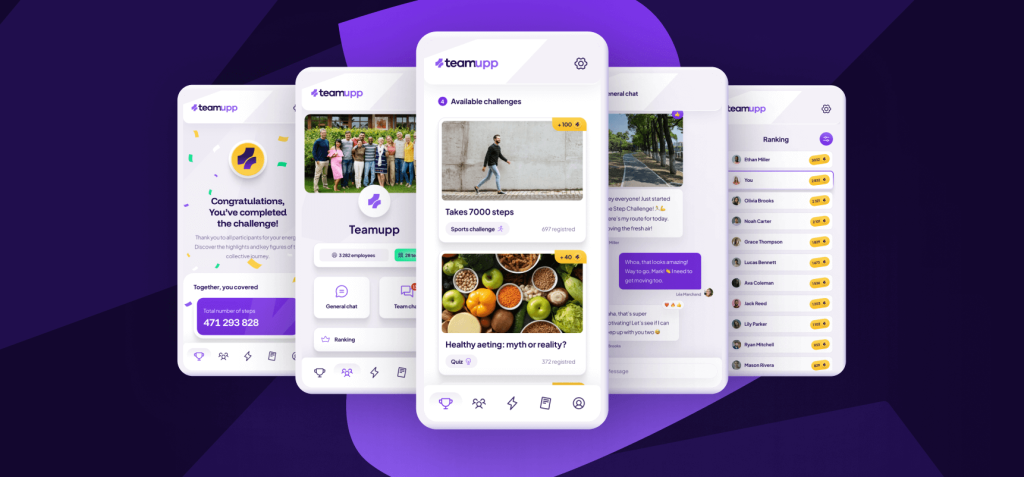
Teamupp offers corporate wellness programs that make it easy to run team challenges, track progress, and boost engagement. Your employees can participate in step challenges, wellness quizzes, and health-focused activities that build community and promote healthy habits. The platform allows you to track activities in real-time, as your teams have friendly competition that keeps them motivated.
2. Mental health support and resources
Mental health support has become essential in today’s workplace. This includes access to counseling services, stress management workshops, meditation apps, and mental health days. Many companies now offer Employee Assistance Programs (EAPs) that provide confidential counseling and support services. Some also bring in mental health professionals for on-site workshops or provide subscriptions to mental wellness apps.
Learning and professional growth
3. Scholarships and education grants
Scholarships and education grants help your employees pursue formal education while working for your company. This might include help paying for college degrees, professional certifications, or specialized training programs.
4. Employer-paid training and stipends
A training stipend is money given to your employees to spend on courses, conferences, or workshops that help them grow professionally. This shows that you’re invested in their long-term success.
5. Continuing education support
Continuing education support helps employees stay current in their fields by covering costs for ongoing learning opportunities, professional development courses, or industry certifications.
6. Tuition reimbursement and student loan assistance
Many companies help employees pay for education by reimbursing tuition costs or helping with student loan payments. This is especially valuable for younger employees who are still paying off school debt.
7. Company-provided equipment
Providing laptops, phones, or other work equipment shows that you want your employees to have the best tools to do their jobs well. Some companies also let employees use this equipment for personal purposes.
Commuting, travel, and work location perks
8. Transportation and commuter benefits
Transportation and commuter benefits help your employees get to work more easily and affordably. This might include subsidized public transit passes, parking allowances, or shuttle services.
9. Remote or hybrid work opportunities
Flexible work location options are now very common. Many employees now expect the option to work from home at least part of the time.
10. Flexible scheduling
Flexible scheduling lets your employees adjust their work hours to fit their personal needs and peak productivity times. Some people work better early in the morning, while others are night owls.
11. Relocation assistance and housing support
When you need to move employees for work, relocation assistance helps cover moving costs, temporary housing, and other transition expenses.
12. Travel reimbursements and expense coverage
Clear policies about travel expenses help employees feel comfortable taking business trips without worrying about personal costs.
13. Unlimited paid time off
Unlimited paid time off policies give employees complete flexibility to take time off when they need it, as long as they get their work done well.
14. Extended leave options
Beyond basic vacation time, some companies offer sabbaticals, extended family leave, or other long-term break opportunities.
15. Company-provided transportation
Some companies provide shuttles, car services, or even company cars to help employees get to work or travel for business.
Financial rewards and incentives
16. Employee investment opportunities
Employee investment opportunities might include access to company stock purchase plans, investment education, or financial planning services.
17. Performance bonuses and recognition programs
Regular recognition and performance-based bonuses show your employees that their hard work doesn’t go unnoticed.
Are you interested in contributing to employees’ daily wellbeing?

Family and lifestyle support
18. Childcare assistance or on-site daycare
Childcare assistance is incredibly valuable for working parents. On-site daycare centers offer the ultimate convenience, but even subsidies for external childcare can be very valuable.
19. Pet-friendly benefits (pet insurance, pet stipends, pet-at-work policies)
Pet benefits show that you understand your employees’ furry family members are important to them. This might include pet insurance, pet care stipends, or allowing well-behaved pets in the office.
Common “industry standard” benefits
20. Health insurance options
This forms the backbone of most benefits packages. It typically includes medical coverage, dental plans, and vision benefits.
21. Family and Medical Leave (FMLA)
FMLA protection ensures your employees can take time off for serious family or health issues without losing their jobs.
22. Disability coverage
Both short-term and long-term disability coverage protect your employees’ income if they can’t work due to illness or injury.
23. Life insurance protection
Basic life insurance protection gives your employees’ families financial security and peace of mind.
24. Retirement and pension plans
401(k) plans with employer matching help your employees build wealth for their future retirement.
25. Paid time off (vacation, sick leave, holidays)
Generous paid time off policies show that you value work-life balance and understand that rest is important for productivity.
26. Employee stock options
Stock options give your employees ownership in the company’s success and can boost their wealth if the company grows.
Legally required employee benefits
27. Workers’ compensation coverage
Workers’ compensation coverage is required by law and protects both your employees and your company if workplace injuries occur.
28. Minimum wage standards and overtime pay
Fair pay practices, including proper minimum wage standards and overtime pay, are legal requirements that also show respect for your employees’ time.
29. Employer contributions to unemployment insurance
These contributions help fund the safety net that supports your employees if they lose their jobs through no fault of their own.
30. Social Security and Medicare obligations
Your contributions to Social Security and Medicare obligations help ensure your employees have support in retirement and access to healthcare as they age.

5 steps to manage employee benefits
Creating great benefits is just the first step. You also need to manage them well so your employees actually use and appreciate what you offer.
Here are some tips for managing employee benefits:
1. Communicate benefits clearly
Your employees can’t appreciate benefits they don’t understand. Give clear explanations of what you offer and how to use each benefit. Consider creating guides that are easy to read and hosting information sessions to share information about the benefits in digestible ways.
2. Offer flexible or customizable benefit packages
Not everyone needs the same benefits. Flexible packages let your employees choose what works best for their individual situations. Some companies offer “cafeteria-style” benefits where employees get a certain amount of money to spend on the benefits they value most.
3. Use surveys and feedback
Regular feedback helps you understand what your employees actually want and use. You can take anonymous surveys to identify gaps in your current offerings or benefits that aren’t meeting expectations. Employee engagement software can help you gather this feedback systematically and track changes over time.
4. Benchmark with workplace engagement statistics
Stay competitive by researching workplace engagement statistics and seeing what other companies in your industry offer. But don’t just copy what everyone else does. Use this information to make sure your benefits package is competitive while still fitting your company culture.
5. Make data-driven adjustments
Use participation rates, feedback, and other data to improve your benefits offerings. If nobody uses a particular benefit, maybe it’s time to replace it with something more valuable. Employee engagement games and interactive tools can also help you gather data about what motivates your teams.

How to choose the right benefits mix for your company
To create the perfect benefits package, you must consider what your employees want and what your company can afford and manage well.
Consider company size and budget
Smaller companies can’t always compete with large corporations on benefits breadth, but they can focus on the benefits that matter most to their specific teams. Sometimes, creative, low-cost benefits can be more meaningful than expensive traditional ones.
Think about demographics
Different generations often value different types of benefits. Younger employees might prioritize flexibility and professional development, while older employees might focus more on health insurance and retirement planning. Survey your teams to understand what matters most to your specific workforce.
Align with culture and values
Your benefits should reflect and reinforce your company’s values. If you value work-life balance, make sure your benefits support that. If you prioritize innovation, invest in learning and development benefits.
Future HR trends in employee benefits
As the corporate world evolves, so do benefits packages too. Here are some HR trends in employee benefits to look out for:
Flexibility and personalization (cafeteria-style benefits)
More companies are moving toward personalized benefits that let employees choose what works best for their lives. This trend will likely continue as employees expect more control over their total compensation packages.
Mental health and wellbeing
Mental health support is becoming as important as physical health coverage. Expect to see more comprehensive mental health benefits, stress management programs, and overall well-being initiatives.
Financial wellness programs
Beyond basic retirement plans, companies are starting to offer comprehensive financial wellness programs that help employees with budgeting, debt management, and financial planning.
Sustainability-driven perks
Environmentally conscious benefits like electric vehicle charging stations, public transit subsidies, and carbon offset programs might become more popular in the near future. They appeal to employees who care about environmental impact.
The best benefits packages include traditional options like health insurance and perks that match your company culture and employee needs. When you get this balance right, you’ll build a workplace where people want to stay, grow, and do their best work.
Are you interested in contributing to employees’ daily wellbeing?