Looking to boost morale, improve productivity, and foster a healthier work environment ?
Implementing a wellness program at work is one of the most effective strategies to improve employee wellness —and it doesn’t have to be complex or costly.
Whether you’re starting small or aiming for a full-scale initiative, this guide breaks down every key step. From employee wellness program examples to practical tips and budgeting, learn how to build a corporate wellness program that supports long-term engagement and performance.
How to start and implement a wellness program at work
1. Assess your employee’s needs
Contrary to popular belief, ‘just add yoga’ is not a complete wellness strategy.
Actually, a wellness program can be so many different things. So, to find out which one suits your workforce best, you should start by asking them.
Launch a wellness needs assessment survey
Create a short, confidential questionnaire to explore the areas where your employees want support.
Ask about:
- Current stress levels and burnout risks
- Preferred wellness activities (e.g. fitness, mindfulness, nutrition, financial education)
- Desired formats (in-person vs. virtual, solo vs. group)
- Perceived obstacles (e.g. lack of time, motivation, or awareness)
- Ideas or initiatives they’d like to see
Try to identify a recurrent theme to create a program that will talk to everybody.
Common needs include stress management, physical activity, work-life balance, financial literacy, inclusivity, etc.
Review existing data
Look at absenteeism, EAP usage rates, participation in past wellness initiatives, or exit interviews to identify recurring challenges.
Our wellness tip:
Segment your workforce by location: remote, hybrid, and on-site to highlight different needs.
2. Set wellness goals
Once you know a bit better what your employees’ needs and struggles are, you can define clear, measurable goals aligned with your company culture.
This step is crucial. It helps you stay accountable and makes it easier to evaluate the impact of your wellness program later on.
Now, it’s time to translate them into action — using the SMART framework:
- Specific – Define exactly what you want to improve
- Measurable – Include a metric to track progress
- Achievable – Ensure it’s realistic given your resources
- Relevant – Align the goal with employee feedback and business priorities
- Time-bound – Set a deadline to create urgency and focus
For example :
“Increase participation in weekly wellness activities from 20% to 50% by the end of Q1.”
“Offer a financial literacy webinar attended by at least 60% of staff before April.”
3. Define a budget
While there are no rules of thumb about how much to spend and how to create an employee well-being program, here is a breakdown of the 3 main budgets, depending on a company’s size.
Small company (under 50 employees): $500–$2,000/year
Monthly per employee: $0.5–$2
What you can do:
- Offer occasional perks: e.g. herbal teas, ergonomic accessories, yoga mats
- Organize monthly themed wellness days: walk challenges, no-meeting days, screen-free hours
- Share curated digital wellness content (videos, podcasts, articles, templates)
- Bring in a speaker or local coach once or twice a year (negotiated rate or free trial)
Medium company (50–200 employees): $2,000–$10,000/year
Monthly per employee: $2–$4
What you can do:
- Run quarterly wellness campaigns using an employee wellness software
- Offer on-demand fitness or mental health content via apps
- Provide healthy snack subscriptions or reimbursements
- Organize group activities: team runs, desk declutter day, wellness bingo, etc.
- Launch a mental health support line or an occasional mental health day
- Include employee recognition rewards tied to wellness milestones
Large company (200+ employees): $10,000+ depending on scope
Monthly per employee: $5+
What you can do:
- Offer comprehensive wellness platform access for all employees
- Host wellness weeks or seasonal wellness challenges aligned with HR/sustainability calendars
- Provide gym memberships or fitness reimbursements
- Introduce financial wellness tools: coaching, micro-savings, workshops
- Fund mental health programs: EAPs, therapy reimbursements, self-care apps
- Create hybrid-friendly initiatives across multiple office locations
- Develop a “wellness champions” program to foster peer-led engagement
ROI Insight:
Even though it is hard to measure, an effective wellness program can yield a ROI of 2.7:1 to 6:1 when properly implemented — through lower absenteeism, higher morale, and improved retention.
4. Choosing the right activities
A successful wellness program is a holistic one.
Offer a variety of wellness initiatives that cover different aspects of wellness : fitness, nutrition, mental health, financial literacy, and community engagement.
Mix long-term habits with short-term events, and you’re ready to go.
Further down this article, we have a list of simple ideas to create your own employee wellness programs.
Wellness in action:
Salesforce offers employees 7 paid days per year to volunteer for causes they care about. Their hybrid-friendly Volunteer Time Off (VTO) program sees strong engagement: 75% of employees participate, and those who do are 20% more likely to stay longer with the company.

5. Selecting tools and platforms
Choosing the right tools to manage your wellness program is essential for scalability and long-term engagement. Your platform should be:
- User-friendly: Intuitive for all users, regardless of tech comfort. Look for tools with mobile apps or easy web interfaces.
- Flexible: Able to support multiple types of wellness activities—physical, mental, social, financial—so you’re not locked into one format.
- Data-driven: Includes tracking dashboards, engagement analytics, and goal-setting features to help HR evaluate impact and ROI.
- Inclusive: Especially important in hybrid and remote environments. Ensure employees across all locations can participate equally, with no extra effort.
Getting leadership support
Without buy-in from leadership, even the best-designed wellness program risks falling flat. Here’s how to secure and sustain leadership involvement:
- Tie wellness to business goals: Highlight how improved employee wellness leads to reduced absenteeism, higher productivity, and stronger talent retention—all measurable outcomes that matter to executives.
- Invite early participation: Involve HR, team leads, and key department heads in the planning stage. Ask for their input and let them co-design aspects of the program.
- Lead by example: Encourage leaders to be visible participants in wellness initiatives—whether it’s joining a step challenge, writing a note in the gratitude wall, or hosting a wellness Q&A session.
- Communicate top-down: Let your leadership team introduce the program, either via internal video, newsletter, or all-hands meeting. This gives credibility to the initiative and boosts early adoption.
7. Communicating the program
A wellness program is only as strong as its visibility. Communication must be multi-channel, consistent, and inclusive:
- Pre-launch phase: Tease the initiative 1–2 weeks in advance with save-the-date emails, Slack teasers, or posters. Create curiosity and anticipation.
- Launch: Use all available formats—email, internal newsletters, digital signage, and company meetings—to explain what the program is, how it works, and what’s in it for employees.
- Ongoing updates: Weekly reminders, leaderboards, testimonials, or highlight reels keep energy high and reinforce engagement. Make sure updates reach remote teams, not just in-office staff.
- Onboarding integration: Include wellness program details in onboarding materials to signal its importance from day one.
Our tip: Make communications visual and story-driven—show real people participating, celebrating, and growing.
8. Tracking results
You can’t improve what you don’t measure. Define early what success looks like, and set up simple tracking mechanisms to monitor your KPIs. Key areas to track:
- Engagement metrics: Participation rate, activity completion, team vs. individual performance
- Health outcomes: (If applicable) Changes in absenteeism, reported stress levels, or productivity surveys
- Feedback loops: Use post-challenge surveys or suggestion boxes to collect qualitative insights
- Cultural impact: Monitor changes in team sentiment, collaboration, and feedback from exit or engagement surveys
If you’re using a digital tool, choose one that offers real-time dashboards, data exports, and automated reporting. This makes it easier to iterate, scale, and prove ROI to stakeholders.
Why start a wellness program?
For employers
- Improved productivity: Wellness programs can reduce presenteeism and boost overall performance. According to Harvard Business Review, companies can get $3 in ROI for every $1 spent on wellness.
- Lower turnover: Employees who feel cared for are more loyal. SHRM report emphasizes that programs integrating physical, emotional, and financial well-being are driving higher engagement and retention rates
- Reduced absenteeism: Healthier employees = fewer sick days.
- Better employer branding: Stand out as a caring, future-ready employer.
For employees
- Less stress, better focus: From mindfulness to movement, wellness initiatives help reduce mental load.
- Higher engagement: Wellness programs promote connection, motivation, and a sense of belonging.
- Improved physical health: Encouraging regular exercise and healthy habits contributes to long-term wellness .
- Personal growth: Employees gain access to tools and education that benefit both their personal and professional lives.
How to start a wellness program at work: 5 easy ideas
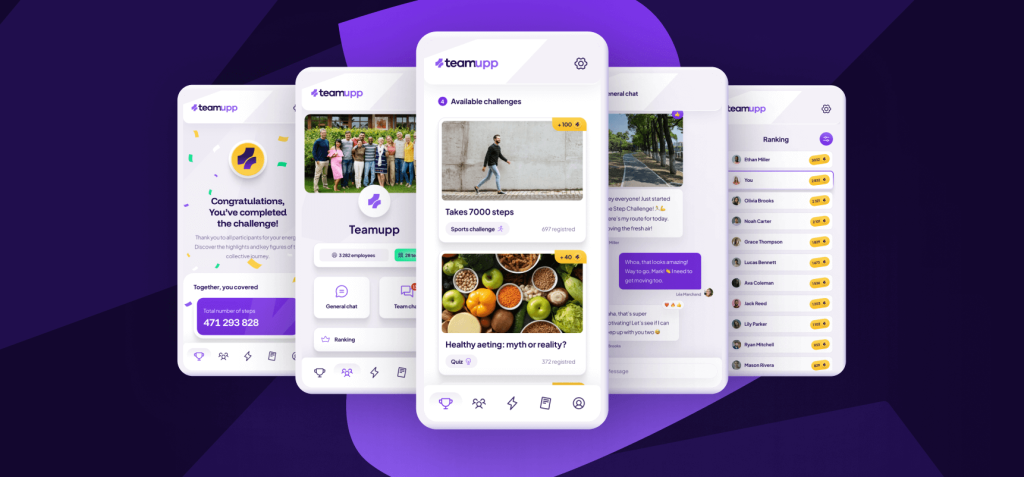
1. Sign up for the Teamupp app to kick things off!
Teamupp is the perfect entry point for your corporate wellness journey. This all-in-one platform lets you:
- Launch gamified wellness challenges
- Offer fun and friendly team competitions and habit-tracking features
- Choose between short campaigns or year-long engagement plans
- Create real-world impact through donations to NGOs.
- Get instant analytics and leaderboards, great for HR
Teamupp is mobile-friendly and easy to implement—ideal for remote and hybrid teams. Whether you’re running a “New Year” challenge or planning quarterly health events, it supports long-term employee wellness and cohesion.
2. Organize walking meetings
Encourage movement and reduce screen fatigue with walk-and-talk sessions.
3. Offer wellness breaks
5- to 15-minute breaks for stretching, breathing, or digital detox can boost mental clarity and productivity.
4. Create a gratitude channel
Use Slack or Teams to start a #gratitude thread where employees can shout out wins or positive moments.
5. Launch a healthy lunch club
Ask employees to take turns sharing simple, nutritious recipes. Consider setting up a shared doc or photo gallery.
The pillars of a successful corporate wellness program
Physical wellness
Physical wellness programs aim to help employees stay active, reduce health risks, and prevent chronic conditions. Encouraging movement and better posture isn’t just good for the body—it also boosts mood, productivity, and overall energy levels at work.
Examples:
- Gym reimbursements or discounts
- Standing desks and ergonomic chairs
- On-site yoga or fitness classes
- Step challenges via wellness apps like Teamupp
- Annual health check-ups or screenings
Social wellness
Social wellness in the workplace is about fostering connection, collaboration, and a strong sense of belonging. When employees feel supported by their peers and included in their company culture, engagement and morale naturally rise.
Examples:
- Peer-to-peer recognition platforms
- Mentorship and buddy systems for new hires
- Monthly team-building activities (virtual or in-person)
- Gratitude walls or shout-out boards
- DEI-focused events or roundtables
Mental wellness
Mental wellness programs aim to prevent burnout, manage stress, and support emotional resilience. Encouraging mental health conversations and offering accessible resources shows employees their wellness is a priority.
Examples:
- Meditation and mindfulness tools (e.g., Headspace, Insight Timer)
- Employee Assistance Programs (EAPs) with confidential counseling
- Paid mental health days or recharge leave
- Stress management workshops and webinars
- Quiet rooms or recharge spaces at the office
Financial wellness
Financial stress impacts both employee wellness and workplace performance. A strong financial wellness pillar helps staff feel more secure, confident, and in control of their future.
Examples:
- Budgeting webinars or one-on-one financial coaching
- Salary sacrifice schemes for savings or transport
- Exclusive employee discounts for everyday expenses
- Pension and benefits education sessions
- Gamified savings or no-spend challenges
Community wellness
Community wellness connects employees with meaningful causes, boosting purpose, pride, and company culture. Giving back also strengthens your brand’s social impact and employee alignment with company values.
Examples:
- Paid volunteering days for local or personal causes
- Internal or public charity challenges (e.g., fundraising, donations)
- Monthly sustainability missions (e.g., zero-waste week, car-free commute)
- Partnerships with local NGOs or nonprofits
- Events around social causes (e.g., Pink October, Earth Day, Movember)

How to create a corporate wellness program on a budget
1. Start with what you already have
Audit your current perks or team habits. Maybe you already have:
- Slack channels for hobbies or health
- Employee discounts
- Enthusiastic volunteers for leading activities
2. Use free or low-cost digital tools
And there are plenty!
- Google Forms for surveys
- YouTube yoga classes
- Wellness-focused Slack bots
- Teamupp’s affordable wellness plans
3. Partner with local providers or employees
Invite local yoga teachers, nutritionists, or therapists for free or discounted sessions. Encourage employees to lead initiatives based on their skills or hobbies.
Implementing a wellness program in the workplace – Q&A
What is the first step of developing a wellness program?
Start by assessing your employees’ needs and preferences. This ensures your wellness program is both relevant and impactful.
How to create your own wellness program?
Follow these steps: assess needs, set goals, define budget, select activities and tools, get leadership buy-in, communicate clearly, and track results.
What are workplace wellness programs?
These are structured initiatives designed to improve employees’ physical, mental, and emotional wellness . They range from health challenges and workshops to ongoing support systems.
Thinking about implementing wellness programs in your workplace? Try Teamupp for free and make wellness work for everyone!