If you want to create a workplace where your employees thrive, succeed, and are productive, you must work to foster a culture of wellbeing.
An effective employee wellbeing program is your golden ticket to happier teams, higher retention, and higher productivity.
But where do you start?
From fitness challenges to mental health initiatives, we’re exploring 13 health promotion examples that have been proven to work.
Whether you’re updating your existing strategy or building one from scratch, these ideas will help you build a healthier, more engaged workforce.
Ready to make a difference? Let’s get started!
What is a corporate health promotion program?
Corporate employee wellbeing programmes are strategic initiatives designed to improve employees’ overall physical, mental, and emotional wellbeing. These programs can take many forms, from gym memberships and healthy snacks in the office to mental health support and financial wellness workshops.
These programs aren’t just perks you offer your employees; they’re a smart investment in your workforce. Why? Because a happy, healthy employee is focused and productive!
These initiatives can also help you cut turnover rates, attract top talent, and improve your organisation’s reputation.
Put simply, corporate health promotion programs are about creating a culture where business success and employee wellbeing go together.
What key features to expect?
When designing or evaluating your corporate health promotion program, you should look for a few essential elements:
- Personalisation: You should understand that each employee has a different health need. Your programs should be inclusive, flexible and customisable so that it serves most of your staff.
- A holistic approach: Effective programs address more than physical health. They should also include mental health support, stress management resources, and financial wellness tools.
- Accessibility: It should be easy for your employees to participate in your small business wellness programs. Everyone can benefit from on-site services, online options and regular communication.
- Measurable impact: When choosing wellness program examples, you should be mindful of the analytics. Your programme should give you a way to assess success, using tools like employee surveys, participation rates, and actual improvements in productivity or health outcomes.
- Leadership support: Leadership-backed initiatives tend to be more successful. When management participates in wellness activities, your employees are more likely to participate. So, encourage the management to participate as well.
13 Examples of health promotion at work
Not all health promotion programmes might work for every organisation. You will need to assess the unique needs of your employees before picking a program that works best for your situation.
Here are our top 15 health promotion examples that you can try:
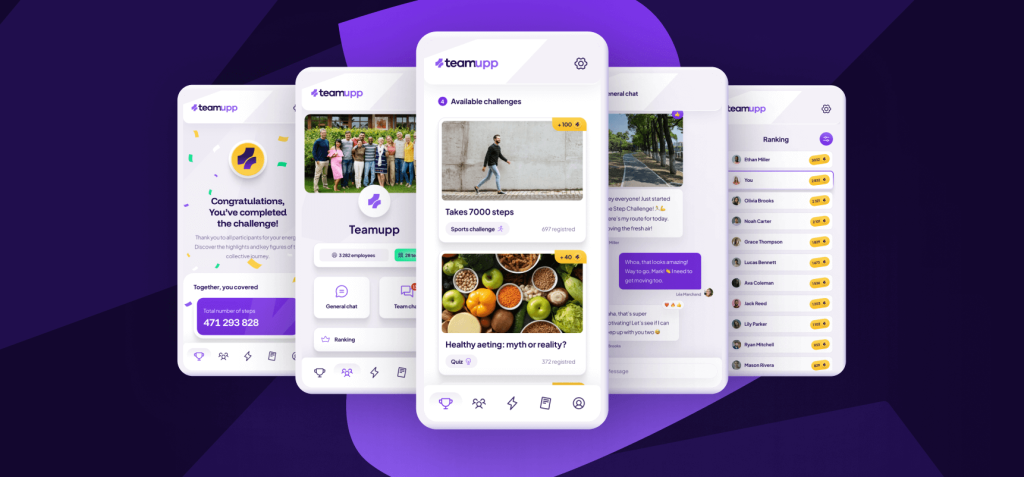
1. Step challenge competitions with an app
One fun way to make the workplace more competitive and promote employee activity is to use step challenges. These challenges motivate people to walk more, be it during lunch breaks, while commuting, or at home.
Employees tend to enjoy sharing their progress, which builds a stronger sense of community. Rewarding your top participants or teams adds even more to the initiative.
Recommended tool: Teamupp app for setting up step challenges, engaging participants and collecting data.
Practical steps:
- Set clear step goals or choose one of the premade ones on the app, like “Complete a marathon as an entire company”
- Use the Teamupp newsfeed to engage employees in the rankings
- and the statistics to collect meaningful engagement data
2. On-site fitness classes
Fitness classes in the office are fun and effective ways to get employees active and engaged. These classes get physical activity right to your workplace, circumventing the usual obstacle — lack of time.
These sessions might include yoga to high-energy Zumba tailored to all fitness levels to create physical and mental wellbeing.
Recommended tool: You can get certified trainers through local fitness instructors or ClassPass apps.
Practical steps:
- Find out what activities employees prefer
- Work with local instructors or use certified trainers to run on-site classes
- Schedule classes at a time that is convenient for your staff: during lunch or after work
3. Healthy snack options
A simple but impactful way to encourage better eating habits among your team is by providing healthy snacks in the office. Processed snacks can be swapped for fruits, nuts and whole grain options that will keep employees full and provide them with sustained energy throughout the day.
Productivity naturally goes up when your employees are energised and focused. Also, by providing nutritious snacks to your team, you tell your employees that you care for their health and wellbeing. It can also spark conversations around the office regarding a healthy lifestyle and serve as a stepping stone towards bigger wellness initiatives.
Recommended tool: You can try curated healthy snack delivery services like SnackNation or Graze. If you are on a budget, you can assign an in-house team to scout and stock up on healthy snack options.
Practical steps:
- Stock breakrooms with fruits, nuts, and low-sugar snacks
- Offer incentives like “healthy snack of the month” challenges
- Monitor preferences to ensure options align with employee tastes
4. Mental health workshops
Mental health workshops give your employees the tools and resources they need to take care of stress, anxiety, and other challenges they might face both in their personal and professional lives.
The agenda of these workshops can range from mindful techniques to stress reduction methods to learning how to recognise the early signs of burnout. You can break the taboo, foster open discussions, reduce stigma and create a supportive work environment with these examples of health promotion.
Emotionally supported employees are more likely to remain engaged, productive and loyal to your organisation.
Recommended tool: You can use tools like Headspace or BetterHelp for employee support programs.
Practical steps:
- Hire mental health professionals to meet quarterly
- Urge your managers to talk openly about mental health as an example
- Give ongoing access to therapy apps or EAP (Employee Assistance Program)
5. Flexible work hours
Giving your employees flexible work hours allows them to better manage their professional and personal lives. Health promotion examples that introduce flexibility can decrease stress and increase job satisfaction by letting your employees manage their schedules.
Flexibility can increase productivity because employees can work during their peak focus hours. It also shows your employees that you prioritise their health. Such programmes are especially great for working parents or those with caregiving responsibilities and create a more inclusive workplace culture.
Recommended tool: You can use workforce management software like Deputy or Clockify to implement such health promotion examples.
Practical steps:
- Define clear guidelines for flexible hours.
- Train your managers to handle flexible scheduling effectively.
- Regularly check in with employees to ensure the system meets their needs.
6. Ergonomic workstations
Ergonomic workstations are a godsend for employee comfort and health. Adjustable chairs, tables and other supporting devices can help stave off things like back pain, eye strain and repetitive stress injuries.
A well-designed workstation also increases productivity by reducing discomfort and creating a better workspace. Ergonomics investments show your concern for your employees’ physical wellbeing, can boost morale, and cut absenteeism due to health problems.
Recommended tool: You can procure ergonomic office furniture from suppliers like Herman Miller or VariDesk.
Practical steps:
- Conduct ergonomic assessments for each workstation
- Invest in adjustable desks, supportive chairs, and monitor stands
- Offer training on proper posture and workstation setup
7. Smoking cessation programs
Smoking cessation programs assist your employees with taking the first critical step to quitting this harmful habit. Typically, these programs come with tools, such as nicotine patches, counselling, or apps to monitor progress.
Such initiatives help employees’ physical health and can also reduce your organisation’s long-term healthcare costs. They can also create a positive workplace culture.
It also helps to make the air cleaner and the work environment more pleasant for everyone.
Recommended tool: National health organisation resources such as Quit Genius or other programs.
Practical steps:
- Provide access to smoking cessation tools like apps, patches, or counselling
- Organise support groups or pair employees with accountability partners
- Celebrate milestones to keep participants motivated

8. On-site health screenings
You can bring preventive care directly to the workplace with on-site health screenings, making it easy for your employees to monitor their health.
Screening can include tests for blood pressure, cholesterol, glucose, and other vital markers. Early detection of potential health issues allows your employees to get treatment before problems become more serious, helping keep costs down.
Implementing such initiatives also removes common barriers like time constraints, travel, etc.
Recommended tool: Partner with local clinics or companies providing white-label wellness programs.
Practical steps:
- Schedule screenings during working hours for maximum participation
- Include checks for blood pressure, cholesterol, and glucose levels
- Share anonymized health insights to guide future wellness initiatives
9. Financial wellness programs
Financial stress can greatly affect your employees’ mental health and ability to focus. Financial wellness programs help employees learn to budget, save for the future and get out of debt.
These programs are so effective because they help reduce a significant source of stress in a proactive manner. Such initiatives give your employees the skills to take control of their finances, making them more focused at work.
Investing in financial wellness programs for your employers builds trust and loyalty in teams’ work and shows that it’s about much more than the office.
Recommended tool: Use platforms like SmartDollar or FinFit.
Practical steps:
- Organise monthly workshops on financial topics like debt reduction or investing
- Provide access to one-on-one financial counselling
- Share digital tools or templates for budgeting
10. Volunteering days
Volunteering days help employees work with their communities and make them feel like they are making a difference. These initiatives are a chance to break out of work routines and connect with things that are important to your team.
When team members participate in such activities, they often feel fulfilled by contributing to something greater. Additionally, volunteering days can enhance your organisation’s reputation as a socially responsible organisation.
Recommended tool: Use sites like VolunteerMatch to spot local opportunities in your area.
Practical steps:
- Allow employees one paid day off per quarter to volunteer
- Partner with local nonprofits for group volunteering activities
- Share success stories to inspire ongoing participation

11. Nutrition coaching
Coaching provides your teams with personalised advice on how to improve diet and overall health. Usually, this service includes one-on-one consultations with dietitians, meal planning, and personal guidance suited to your specific health goals.
Your employees learn how to eat healthier, whether they’re trying to lose weight, manage a condition, or just want to feel better. Nutrition coaching gives your team power over their choices and fosters a wellness culture throughout the workplace.
Recommended tool: You can use platforms such as NutriPro or Zocdoc to get certified dietitians.
Practical steps:
- Host monthly lunch-and-learns with nutrition experts
- Offer employees one-on-one consultations with dietitians
- Provide meal planning tools or discounts on healthy meal delivery services
12. Recognition and rewards programs
Recognition and rewards programs help recognise and reward employee achievements and milestones, creating an environment that increases participation and motivates employees to continue succeeding.
Achievement celebrations reinforce positive behaviour and create a positive work environment. A good rewards program gets your team members involved and reminds them that their efforts matter.
Recommended tool: You can use platforms like Bonusly or Blueboard.
Practical steps:
- Implement peer-nominated awards for wellness achievements
- Offer non-monetary rewards like additional time off or wellness products
- Share success stories company-wide to build a culture of appreciation
13. Employee assistance programmes (EAPs)
Employee assistance programs (EAPs) offer confidential support for problems affecting your team members’ family, health, or work.
These programs cover connecting employees with counsellors or specialists who can help them find their way through difficult situations. EAPs form a safety net that gives your employees access to professional
help when it matters the most.
Early intervention by these programs can increase overall productivity, reduce absenteeism, and increase employee morale.
Recommended tool: Check out services like LifeWorks or ComPsych.
Practical steps:
- Partner with a reputable EAP provider to offer 24/7 support
- Regularly remind employees about the availability of EAP services
- Incorporate EAP usage insights (anonymously) to tailor future wellness initiatives
Strategies to support employees in disease management with a workplace health promotion program
Strong workplace health promotion examples can go a long way toward helping employees cope with chronic disease and stay healthy.
Here are practical strategies that benefit wellness programs in your organisation:
1. Destigmatize disabilities
Promote an inclusive workplace culture by normalising conversations about disability and chronic illness. You can achieve stigma reduction and empathy generation through awareness campaigns and employee resource groups.
2. Teach stress management
Chronic stress can make health conditions worse. Make sure that your wellness programs have resources for employees who are stressed out like workshops on stress management techniques, mindfulness training or guided relaxation sessions to handle stress effectively.
3. Implement stress-reducing wellness ideas
Wellness rooms, natural lighting, or soothing decor help create a calming work environment. If possible, give your team members access to meditation apps or schedule regular wellness breaks to help them relax.
4. Practice and encourage mindfulness
Use guided meditation or breathing exercises as mindfulness practices in the workplace. Ask your managers to lead and attend mindfulness sessions.
5. Promote open communication
Create an office environment so that your employees feel comfortable talking about their health. Teach and train managers on how to have empathetic conversations about employee needs.
6. Facilitate flexible work arrangements
Employees with chronic conditions need flexibility. To help them balance work and health care, offer a variety of remote work options, such as reduced hours, different schedule options, or even flexible hours.
7. Provide health education resources
Provide your employees with information on how they can manage their conditions through newsletters or workshops. You can also consider providing access to learning platforms providing education surrounding preventing and managing certain diseases.
8. Encourage team support
Teamwork benefits wellness program initiatives. Simple gestures, like offering help during high-stress periods, can make a significant difference.
9. Offer Employee Assistance Programs (EAPs)
EAPs offer confidential support to employees trying to cope with mental challenges, family problems, or chronic illness. They are an essential source of overall wellbeing.
10. Create peer support groups
Organise or facilitate support groups for employees with similar health issues to share resources and experiences to feel like they belong.
11. Implement regular health screenings
By identifying issues early, on-site health screenings help empower your employees to address issues early and help them proactively work on their health.

12. Organise health challenges
Wellness challenges that include walking competitions or hydration goals can get your teams going and are an easy and fun way to practice a healthier habit.
13. Incorporate ergonomic solutions
Provide ergonomic workstations to prevent physical strain, which can exacerbate health conditions. Offer assessments to tailor solutions to individual needs.
14. Encourage physical activity
Integrate movement into the workday by offering on-site fitness classes, subsidised gym memberships, or promoting walking meetings.
15. Recognise and reward wellness efforts
Encourage your employees who are actively participating in wellness initiatives. You can reward them with gift cards, wellness kits, or public acknowledgements to get others to participate.
Incorporating workplace health promotion programs isn’t just about boosting productivity—it’s about creating a supportive environment where employees thrive both personally and professionally.
Ready to take your organisation’s wellness initiatives to the next level?
Schedule a free demo of our app today and discover how our customised solutions can transform your workplace into a hub of health, engagement, and success!